

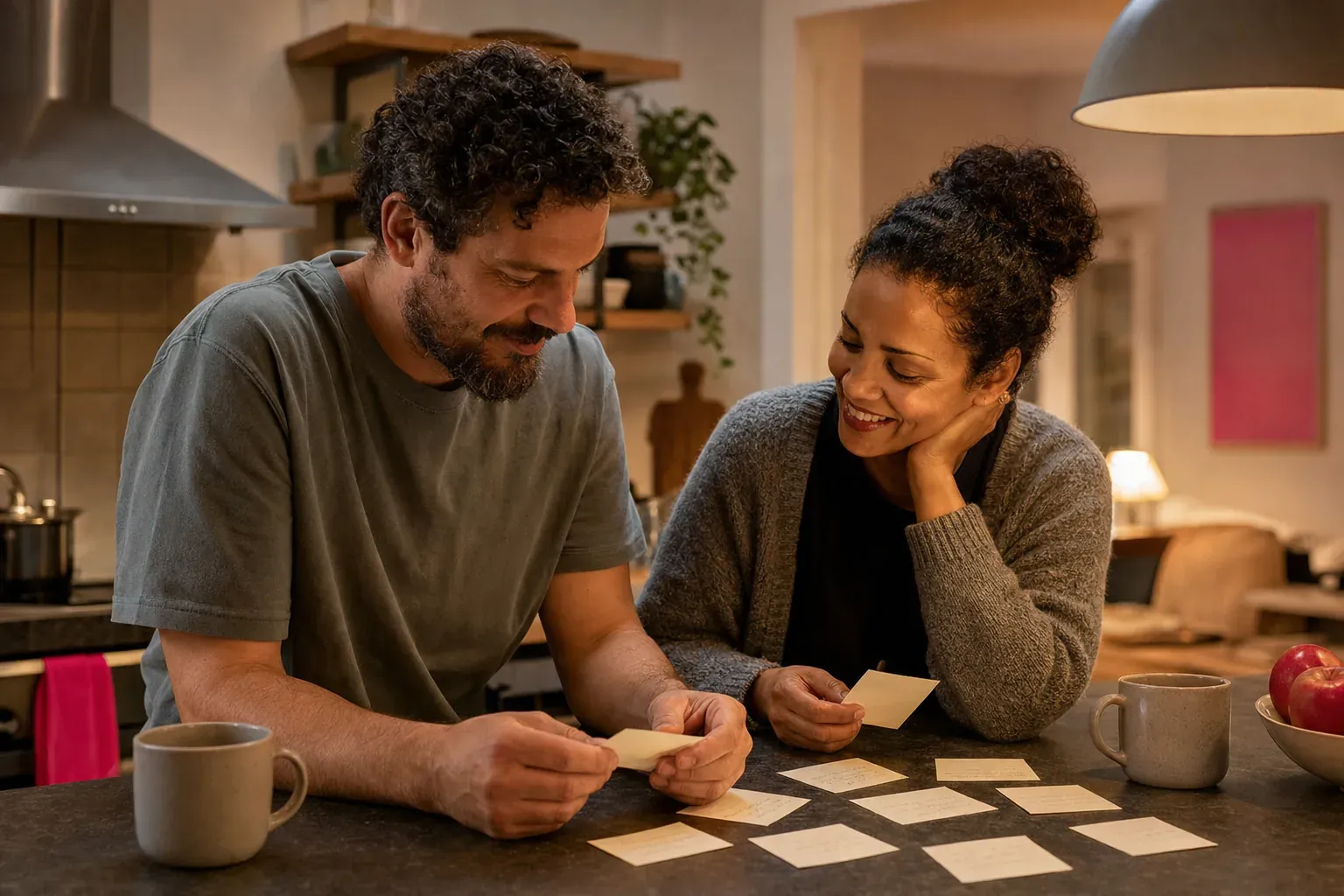
Couples can run a home, a calendar, and a budget well while still missing each other. The fix doesn't need a grand date or a serious talk at the kitchen table. Use these steps to choose couple bonding activities that fit your life, feel mutual, and give you something to look forward to.
Table of Contents
- Step 1: Start With the Kind of Connection You Miss
- Step 2: Choose an Activity That Fits Your Real Schedule
- Step 3: Make the First Invitation Low-Pressure and Mutual
- Step 4: Turn the Activity Into Something You Do Together
- Step 5: Try a Private Wish-Card Quest With BlushQuest
- Step 6: Keep the Shared Rhythm Going Without Making It Homework
- FAQ
- Conclusion
Step 1: Start With the Kind of Connection You Miss
Tonight, skip the vague plan to “spend more time together.” Name the kind of closeness you want first.
Ask yourself one clear question: What feels missing lately?
- Affection, such as more hugs or hand-holding.
- Play, such as laughing without discussing chores.
- Romance, such as a planned evening that feels chosen.
- Conversation, such as learning what your partner is thinking.
- Physical closeness, at a pace that feels good to both of you.
- Shared adventure, even if it happens in your living room.
This small bit of focus changes the activity you choose. If you miss play, a serious relationship questionnaire may feel like work. Try a silly cooking contest, a living-room dance break, or a game with a little friendly rivalry.
If you miss affection, choose something that leaves room for touch without making touch the whole point. Sit close during a film. Trade shoulder rubs. Take a slow walk and hold hands for part of it.
If you miss romance, give the evening a clear shape. Light a candle. Put away the laundry basket. Write one kind note before dinner. The detail doesn't need to cost money. It needs to show that someone thought ahead.
A useful activity gives both partners a role. One person might choose the music while the other picks the dessert. Then swap next time. That keeps one partner from becoming the unpaid social planner for the relationship.
Don't judge the answer. “I want more fun” is enough. So is “I want to feel noticed.” You can turn that feeling into a small action once you've named it.
A licensed therapist's discussion of long-term couples describes a similar gap: some couples manage daily life well while wanting more joy, desire, and shared energy. You can to bringing more play into a relationship.
By now you should have one connection goal, not a ten-item wish list. Keep it small. Small gives you a fair shot at starting.
Step 2: Choose an Activity That Fits Your Real Schedule
Couple bonding activities work better when they fit the week you actually have, not the week you wish you had.
Start with the time you can protect. Be honest. Twenty minutes after dinner may be more useful than an elaborate Saturday plan that never leaves the group chat.
Use the time you have
- Five minutes: Share one good moment from the day, then give your partner a proper kiss.
- Fifteen minutes: Make a snack together and ask each other one playful question.
- Thirty minutes: Take a walk without phones, or play a short couples game.
- One hour: Cook a new meal, build a playlist, or plan a future day trip.
- A free evening: Set up a home date with food, music, and one activity you both choose.
Next, check your energy. A high-effort activity after a long shift may create more tension than closeness. Choose a low-lift plan when you're tired. Save the ambitious plan for a day when both of you have room to enjoy it.
Then check the setting. Some couples talk more easily while walking. Others connect better while making food. If eye contact feels intense after a hard week, sit side by side instead of face to face.
Make the activity specific before you invite your partner. “Let's do something soon” is easy to forget. “Can we make dessert together for twenty minutes after the kids are asleep?” gives the idea a place to land.
Keep a backup plan ready. If the walk gets rained out, make tea and play indoors. If one person runs out of energy, shorten the plan instead of treating that as failure.
For more ideas matched to short evenings at home, browse these activities to do as a couple tonight. Use the list as a menu, not a scorecard.
The right activity is the one you can begin without a long setup. A little anticipation is lovely. A pile of prep is not.
Step 3: Make the First Invitation Low-Pressure and Mutual
Make the first invitation easy to accept, easy to decline, and easy to adjust.
Lead with your wish rather than a complaint. Try, “I miss having a little us-time. Would you be up for a short kitchen date tonight?” That says what you want without telling your partner what they have done wrong.
Give the plan a soft edge. You could say:
- “Would twenty minutes feel doable?”
- “Want to pick between a walk and a card game?”
- “Could we try this tonight, or should we choose another day?”
Choice matters. Your partner may be tired, worried, or focused on something you can't see. A warm invitation leaves room for an honest answer.
And don't turn a “not tonight” into a verdict on the relationship. Ask when might work instead. If there is no good time this week, choose a smaller version. Ten minutes still counts.
Set expectations before an activity that could feel intimate. Say what you're suggesting and what you're not asking for. For example, “I'd love to sit close and talk, but there's no pressure to make the evening anything more.” Clear words can make the plan feel safer.
This is especially useful when partners have different energy levels or different hopes for the evening. One person may want romance. The other may only have space for tea and a quiet chat. You can still share a moment without forcing the same mood.
Surprises can be sweet when they involve an invitation. They become uncomfortable when they remove choice. Plan the reveal, not your partner's response.
By now you should have a short invitation with a time, a choice, and room for a no. That is a strong start.
Step 4: Turn the Activity Into Something You Do Together
Good couple bonding activities need shared effort. Don't make one partner perform while the other watches.
Give the activity a simple beginning. Put the phones away. Choose the first song. Pour the drinks. Pick who goes first. These small cues tell your brains that the usual evening has changed.
Build a shared role
For cooking, one partner can choose the recipe while the other handles the music. For a walk, one person can pick the route and the other can choose a question to discuss. For a game, alternate who reads the prompt.
Don't overmanage the mood. If the meal burns, laugh and order something easy. If the conversation takes a strange turn, let it. A shared activity doesn't need to look polished to feel good.
Use prompts that point toward stories rather than evaluations. Ask, “What would make this week feel lighter?” instead of “Are you happy with us?” Ask, “What did you enjoy as a child?” instead of “Why don't we talk anymore?”
When your partner answers, stay with the answer. You don't need to solve it. A warm “tell me more” can do more than a fast piece of advice.
Try the one-card or one-question rule. Pick one prompt and give it a few minutes. More prompts don't always mean more connection. One good answer can open a door.
You can also add a tiny ritual at the end. Take a photo of the meal. Write down the song you played. Give the night a nickname. These details make the next invitation easier because you have a shared reference point.
For couples who want conversation with a playful frame, these games for couples built for two can help you choose a format without spending an hour searching.
Watch for signs that the activity has run its course. Restlessness, clipped answers, or repeated glances at the clock mean it may be time to stop. Ending while the moment still feels warm makes it easier to try again.
Your goal isn't a perfect date. It's a shared event that feels different from handling the house.
Step 5: Try a Private Wish-Card Quest With BlushQuest
When you want more structure, try a private couples card game built around wishes written by both partners.
BlushQuest is designed for couples who function well as a team but miss feeling like a couple. One partner starts by creating a quest with either 7 or 15 wish cards.
You can choose from 300+ curated ideas or write custom cards. The categories include Affection & Romance, Flirting & Anticipation, Playful Intimacy, Sensory Touch, Care & Support, and Shared Experiences.
That range lets you match the mood of the week. Choose something gentle when life feels full. Pick a more playful direction when you both have energy. Keep the wording personal so your partner knows the card came from you.
Next, choose a two-day or four-day card window. The window gives each card a clear place in the week, but it isn't a promise that the whole quest will last exactly that long. Your pace may change when ordinary life gets loud.

Then send the private invitation. Your partner chooses whether to accept. If they accept, they prepare cards in return. Surprise them with the invitation, never with participation.
Cards appear one at a time. Each partner receives a card written by the other and completes it within the chosen window. The partner who wrote that card then rates how it went, from 0 to 5, and the next card opens.
The structure helps when good intentions keep slipping behind work, care duties, and chores. You don't need to invent a fresh date idea every evening. You only need to respond to the card in front of you.
BlushQuest adds a playful layer too. On-time completion builds a streak and contributes to the couple level. Ratings, timing, and each partner's final streak determine the Quest Champion. Badges mark progress along the way.
That game layer should stay playful. A lower rating isn't a report card on your partner. A missed card isn't proof that anyone doesn't care. Talk about what would make the next card easier, then adjust the pace.
We built BlushQuest for adults 18 and older in committed relationships. It isn't therapy or crisis support. It also can't make an unwilling partner participate. The invitation starts a choice, not a demand. You can see the private couples game format at BlushQuest before deciding if it fits.
One subscription covers both partners, and only the person sending the invitation needs an active subscription. The invited partner gets access through that plan. The 14-day trial applies to the Yearly plan only, so check the current offer before you choose a plan.
By now you should know whether a structured quest suits your shared rhythm. If it feels too formal, return to a simple walk or kitchen date. The format should help you connect, not become another item to manage.
Step 6: Keep the Shared Rhythm Going Without Making It Homework
Couple bonding activities last when they feel like something you want, not another duty waiting for a tick mark.
Start with a pace you can repeat. One shared moment each week may be enough. During a busy stretch, use a five-minute version. During a calmer week, give yourselves more time.
Keep a short menu of activities that already work for you:
- A walk after dinner.
- A shared breakfast before the day starts.
- A question while you sit with tea.
- A card game on the sofa.
- A playlist swap with one song each.
- A small act of care chosen by each partner.
Rotate the planner. If one person always chooses the activity, the rhythm can start to feel like a service they provide. Take turns choosing the next shared moment, even when the choice is tiny.
Use a reset rule. If you miss a planned evening, don't cram two activities into the next night. Simply choose a new time. Consistency grows from returning, not from punishing yourselves for a missed plan.
Notice what creates warmth. Was it the activity itself, the time of day, the lack of phones, or the fact that someone made a choice? Keep the part that helped. Drop the rest.
Some couples prefer action before conversation. A walk can make a talk feel less intense. A shared meal can give you something to do with your hands. A private card can put a wish into words before you discuss it.
That idea also appears in the design of some couples apps. Some offer quick, fun check-ins and daily questions designed to fit your schedule. The useful lesson is about scale: a ritual can be brief and still give the relationship a place on the calendar.
Don't use streaks as a measure of love. If you use a game with streaks, treat them as a nudge to return. The point is the shared moment, not a perfect record.
If the same hard conflict keeps returning, an activity may not be enough. You can pause the game and seek support from a qualified professional. A couples app can add a shared practice, but it isn't a replacement for care that fits a serious need.
Choose your next activity before the current one becomes a distant memory. Put it on the calendar only if that feels helpful. Otherwise, leave a note on the fridge and let the next little quest begin.
FAQ
What are good couple bonding activities at home?
Good at-home couple bonding activities include cooking together, taking turns with questions, sharing music, playing a couples game, or planning a future outing. Choose one activity that fits your time and energy. A short plan with shared effort usually works better than an elaborate idea that adds stress.
How can couples bond when they are busy?
Busy couples can bond by choosing a small activity with a clear start and end. Try a ten-minute walk, a shared snack, or one question before bed. Put the plan beside an existing routine, then keep it flexible when work or care duties change.
How do I invite my partner to try an activity?
Invite your partner by naming what you miss and suggesting one low-pressure option. Say, “I miss having time that feels like ours. Would you try a short walk tonight?” Give them room to decline or suggest another time. Surprise the person with the invitation, never with forced participation.
What makes an activity feel romantic?
An activity feels romantic when both people feel chosen and involved. Add one thoughtful detail, such as a favorite snack, a song, or a handwritten note. Romance doesn't require a costly plan. It needs attention, a little care, and enough space for both partners to enjoy the moment.
Are couples games useful for reconnecting?
Couples games can help reconnect partners by giving them a shared focus and a simple way to begin. Look for a format that respects consent and lets both people take part. Games work best as an opening for a shared moment, not as a test of communication or commitment.
Conclusion
Start with the kind of closeness you miss, then choose the smallest activity that fits tonight. If you want more structure, try a private BlushQuest invitation and let the wish cards guide the next shared moment. Start your quest when both of you have room to play.