


Good couples can run a home, share a calendar, and still miss feeling like a couple. The right game gives you something small to do together without turning the night into a serious talk. Here are six games for couples, each built for a different kind of evening.
Table of Contents
- 1. BlushQuest
- 2. Couple Game, A Flexible Pick for Deciding What to Do
- 3. Happy Couple, For Daily AI Nudges and Message Help
- 4. Lovewick, A Gentle Daily Ritual for Busy Couples
- 5. Cohesa, For Desire Discovery and Intimacy Ideas
- 6. Paired, For Questions and Everyday Emotional Check-Ins
- Quick Comparison: Which Games for Couples Fit Your Relationship?
- FAQ: Games for Couples
- Conclusion
1. BlushQuest
Tonight, instead of Netflix. Start a private quest built from wishes your partner writes for you.
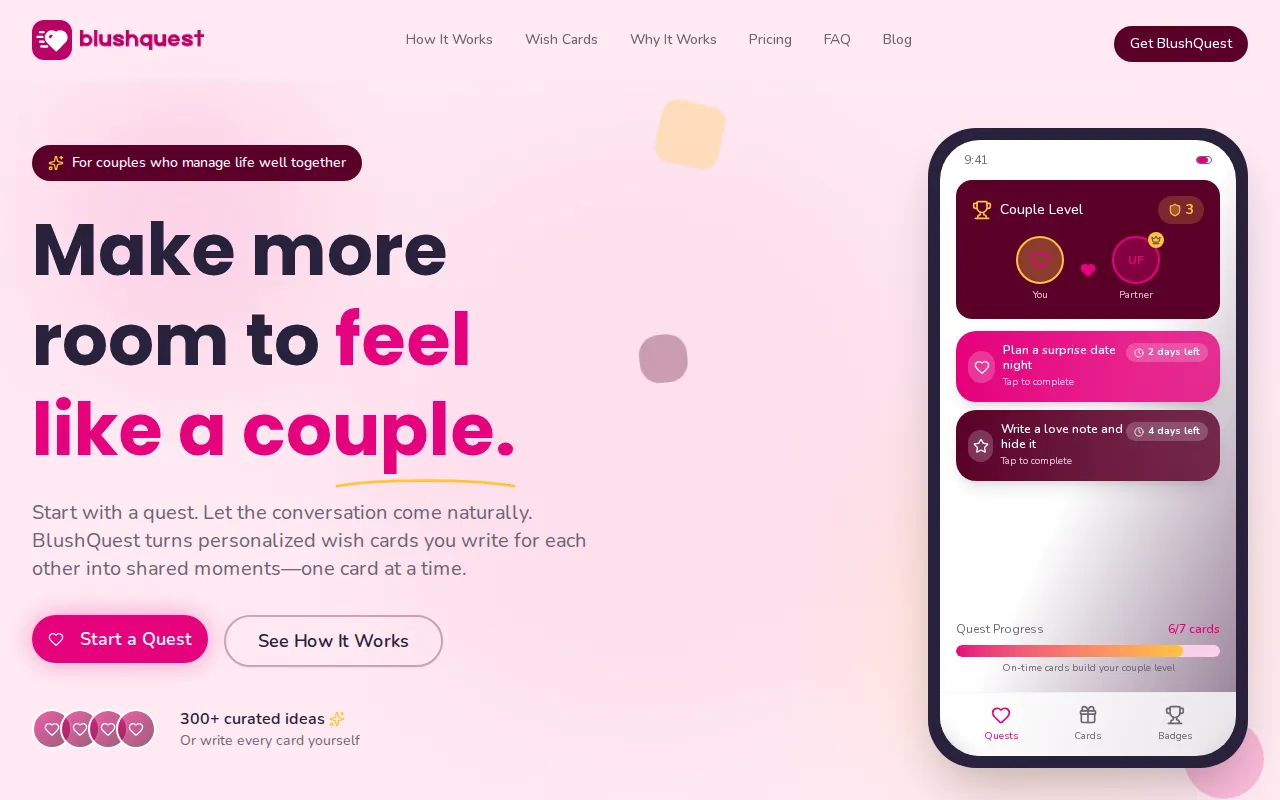
BlushQuest is a couples card game for committed adults who manage life well together but want more affection, play, romance, or intimacy in the week. One partner creates a quest with seven or 15 wish cards. You can pick from 300+ curated ideas or write every card yourself.
Choose the categories and set a two-day or four-day card window. Then send a private invitation. Your partner decides whether to accept and prepares cards for you in return. That consent step matters. The invitation may be a surprise, but participation never is.
Once your partner accepts, cards appear one at a time. You complete the card inside its window, the partner who wrote it rates how it went, and the next one opens. On-time cards build a streak and raise your couple level. Ratings, timing, and each partner's final streak help decide the Quest Champion. Badges mark progress along the way.
The action-first format suits couples who find it hard to begin with, “We need to talk.” A card might point you toward a slow evening, a thoughtful note, a shared experience, or a playful moment. The moment comes first. Conversation has somewhere natural to begin afterward.
BlushQuest is adults-only and private to the couple. It isn't therapy, crisis support, or a way to pressure a reluctant partner. Only the person sending the invitation needs an active subscription, so both partners play through one plan.
Pick this one when you want a repeatable rhythm rather than another one-off question round.
2. Couple Game, A Flexible Pick for Deciding What to Do
Need a quick plan for tonight? Couple Game turns one phone into a menu of questions and playful rounds.

Couple Game has quizzes, conversation starters, truth or dare, and challenge-based modes. It is built for the moment when both of you want to play but neither person wants to plan the date.
Choose a mood first. You might want a couple quiz, a lighter question round, a flirty text battle, or a more daring mode. Then take turns answering or completing the question. The single-phone setup keeps the game easy for a sofa, hotel room, or quiet table at home.
The variety is its main strength. A quiz can test who remembers a favorite film or old story. An open question can shift the mood toward hopes, memories, or opinions. A challenge can add movement when sitting and talking feels flat.
It also works well for couples who want a game without a long setup.
There is a trade-off. The questions come from the game library rather than from your partner. That makes the experience quick and flexible, but it may feel less personal after several sessions. Truth or dare also needs a clear comfort check before you choose a spicier mode.
Use Couple Game when the problem is choice. Pick a mode, set a comfort level, and let the next round decide what happens.
For more low-prep ideas that focus on talking, our collection of couples communication games can help you choose a calmer format.
3. Happy Couple, For Daily AI Nudges and Message Help
Want help remembering the small gesture? Happy Couple is an AI assistant for the two of you rather than a game you sit down and play.
The app asks each partner for a daily mood and how available they feel, then suggests one small action that fits both answers. It will also draft a message to send your partner, and its assisted-dialogue feature rewrites something you have already written to take the edge off before it lands.
Alongside that sit couple games, mood logging over time, and an AI summary of how the relationship has been trending. It runs in the browser as a web app rather than a native install, in French first, with English, German, Spanish and Italian available.
The daily structure keeps each session small. You do not need to reserve a full date night. A few minutes at lunch or after dinner can work, as long as both people want to take part.
That suits couples who want a nudge and would rather not invent the idea themselves. If you have ever wanted a sentence rewritten before you sent it, this is the app that does that.
The trade-off is who is doing the talking. When the app drafts the message and picks the gesture, the thought is partly the software’s. That is the opposite of a wish card your partner wrote in their own words, so it is worth deciding which one you actually want.
Keep the tone light either way. A suggestion you skip is not a failure. It is one idea among many, and the point is that one of you acts on something this week.
4. Lovewick, A Gentle Daily Ritual for Busy Couples
Short on time? Lovewick gives you a small daily nudge with questions, date ideas, and relationship questions.
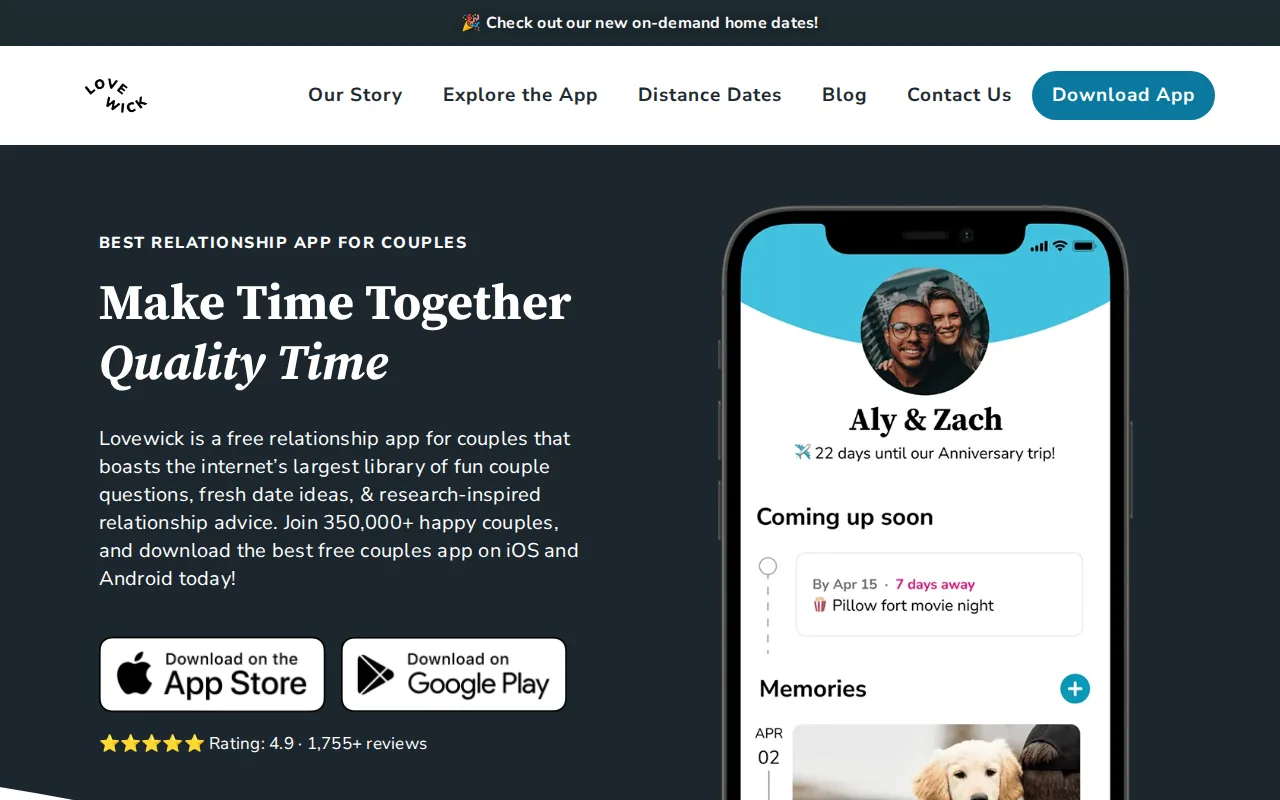
Lovewick is a relationship app built around a large library of couple questions, date ideas, intimacy inspiration, and reminders. Its strength is breadth. You can open it when you want a question, a date suggestion, or a way to remember a small detail about your partner.
The app also includes notes for favorites and important dates. That can help when thoughtful details vanish under work, chores, travel, or care duties. A saved coffee order or birthday reminder may sound tiny. In daily life, tiny acts often carry the whole mood.
For couples who like an ongoing library, Lovewick gives you plenty to browse. You can draw questions for dinner, use questions during a video call, or save date ideas for a later week. The format works when you want choice rather than a fixed sequence.
It is also a good fit for couples who enjoy collecting memories. The app describes a timeline that can hold photos and relationship moments alongside completed ideas. That gives the experience a diary-like side instead of making each question disappear after you answer it.
The caveat is choice overload. A large library can leave you browsing instead of playing. Set a simple rule, such as choosing the first question that fits your mood. You can also pick one day each week for a saved date idea.
Lovewick makes sense when consistency matters more than competition. It is a gentle place to start when you want one small shared moment today.
5. Cohesa, For Desire Discovery and Intimacy Ideas
Some couples don't need more small talk. They need a safer way to discuss desire. Cohesa focuses on that lane.
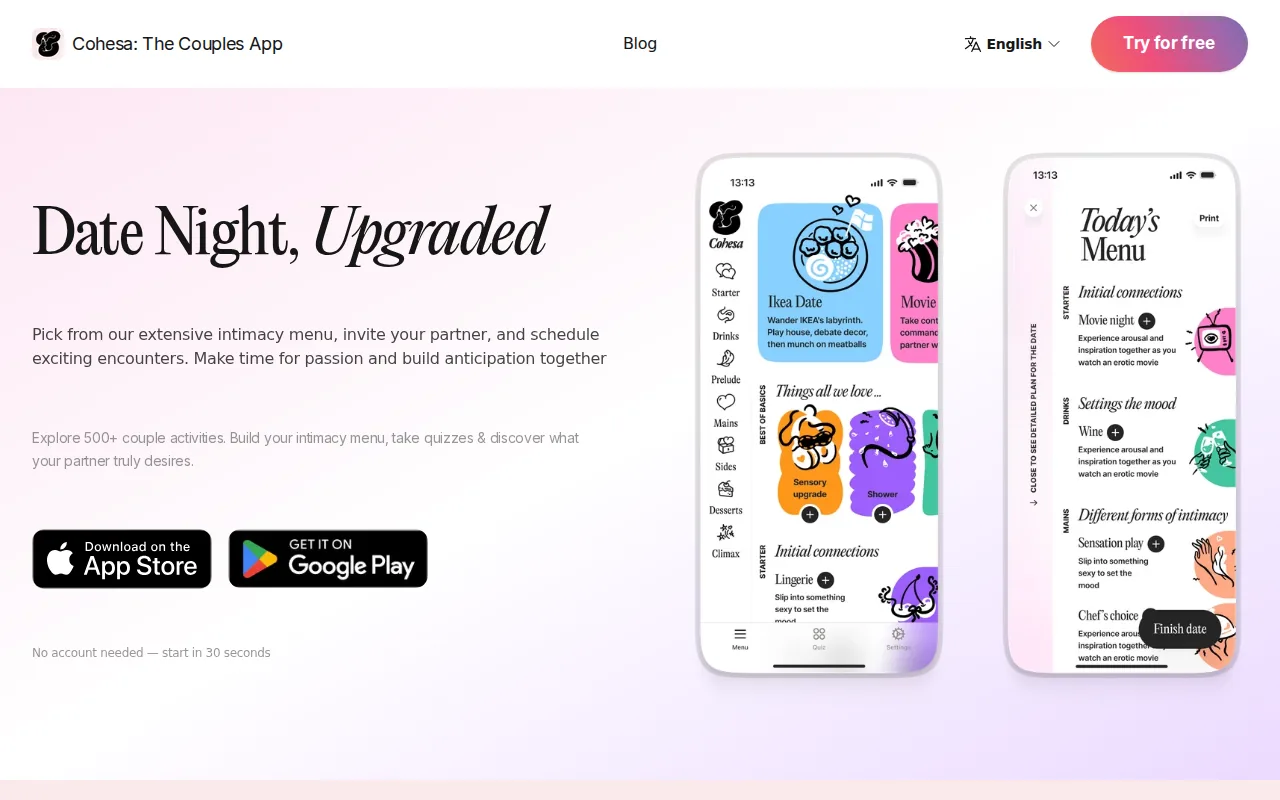
Cohesa uses a swipe-style desire quiz plus a menu of intimate activities. Cohesa describes an intimacy menu of more than 40 activities across seven courses, plus a desire quiz of more than 180 swipe questions. Partners answer separately, then use the shared matches to find ideas that interest them both.
That private answer flow can make a sensitive topic easier to approach. You don't have to announce every thought out loud before you know if there is shared interest. A mutual match gives you a starting point. You can then discuss pace, limits, setting, and whether tonight is the right time.
The menu format keeps the tone less clinical. Instead of facing a blank conversation, you browse options and decide what fits. A couple might choose something light, skip a category, or save an idea for a later date.
That may suit couples who like seeing patterns. It can help start a conversation about how energy, stress, or timing affects interest.
Privacy still depends on how you use any relationship app. Read the current privacy terms before sharing intimate information. Also remember that a match is an invitation to talk, not an agreement to act.
This is the right kind of game for couples who want desire discovery as the main event. If you want affection, care, shared experiences, and playful romance in the same quest, a broader format may fit better.
Keep consent active at every point. The couples app comparison from BlushQuest is useful if you want to compare intimacy questions with wider relationship rituals.
6. Paired, For Questions and Everyday Emotional Check-Ins
Paired is made for couples who want a daily question to open a short emotional check-in.
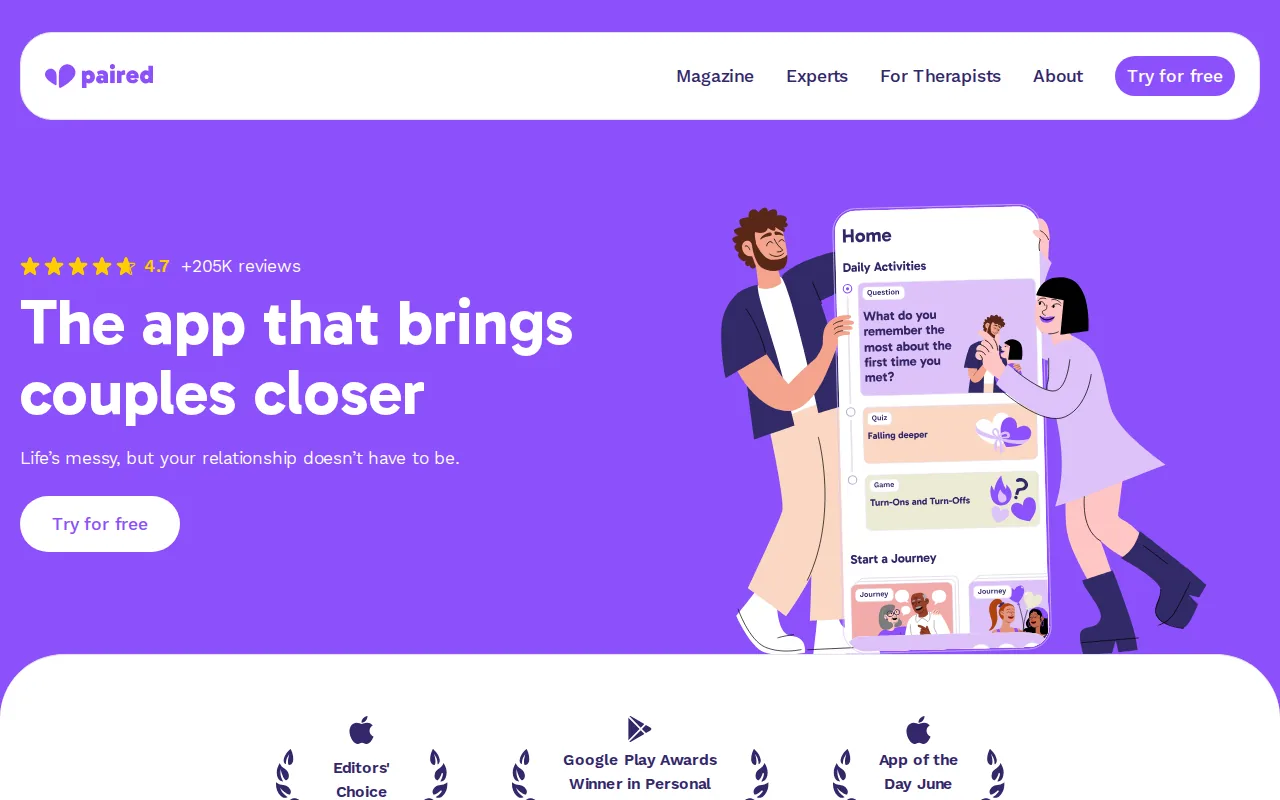
The app centers on daily conversations, quizzes, and guided questions. Each partner answers, then the responses are shared so the couple can discuss them.
Topics can reach beyond romance. The app describes questions about communication, conflict, love languages, intimacy, and household finances. That range helps couples talk about parts of life that often get handled as logistics.
This format is strongest when your goal is emotional awareness. It can help you notice a thought that might otherwise stay in your head. It won't replace a shared date or an action-based quest, though. Some nights you want to answer a question. Other nights you want to laugh, touch, cook, or leave the house together.
Paired has subscriptions and in-app purchases, so check the current terms before starting a trial. Treat it as a conversation tool, not a substitute for professional help.
Choose Paired when a check-in sounds doable tonight. Small beats ambitious when the week is already full.
Quick Comparison: Which Games for Couples Fit Your Relationship?
The right pick depends on what you want to happen after you open the app. Do you want an action, a laugh, a quiz, a desire menu, or a daily question?
Pick | Best fit for | Main format | Watch for |
|---|---|---|---|
BlushQuest | Couples who miss feeling like a couple | Partner-written wish-card quests | Both partners must accept and take part |
Couple Game | Choosing a quick mood for tonight | Quizzes, questions, and challenges | Library questions feel less personal |
Happy Couple | Wanting a nudge rather than a game | AI suggestions, drafted messages, mood log | The app supplies the thought, not your partner |
Lovewick | Building a gentle daily ritual | Questions, ideas, notes, and reminders | A large library can create too much choice |
Cohesa | Exploring shared desire | Private swipe quiz and activity menu | Its focus is mainly intimate discovery |
Paired | Everyday emotional check-ins | Daily questions and guided journeys | It may feel talk-led when you want an activity |
A useful filter is consent and progress.
For a game that combines partner-authored cards, an accept-before-play invitation, timed windows, streaks, levels, badges, and a Quest Champion, start with BlushQuest. For a quick question round, choose Couple Game. For a daily question, choose Lovewick or Paired. For an AI nudge and help wording it, choose Happy Couple. For desire discovery, choose Cohesa.
FAQ: Games for Couples
What are the best games for couples at home?
The best games for couples at home depend on the mood you want. BlushQuest suits partner-written actions and shared rituals. Couple Game works for quick quizzes or playful rounds. Happy Couple suggests a daily gesture and helps you word the message, while Lovewick and Paired fit short question sessions.
What game can help couples feel closer?
A game can help couples feel closer when both people choose to take part. Partner-written cards create a personal action, while daily questions create a short talk. Start with a low-pressure format. A small shared moment is easier to repeat than a grand plan that never reaches the calendar.
Are there intimate games for couples?
Yes, intimate games for couples include desire quizzes, activity menus, and partner-written wish cards. Cohesa focuses on private desire discovery. BlushQuest includes romance, affection, playful intimacy, sensory touch, care, and shared experiences. Agree on comfort first, and treat every question as optional.
What are good games for couples who are busy?
Good games for couples with busy schedules have a clear start and a small time need. Paired uses short daily check-ins. Lovewick gives quick questions and date ideas. BlushQuest adds a card window, so the next action stays visible instead of being lost in another busy week.
Can couples play these games long distance?
Some games for couples work long distance through shared questions, quizzes, or private questions. Paired can fit a call or message-based routine, and Happy Couple works anywhere a browser does. Lovewick also suits video-call questions. Action cards may need a little planning when you aren't in the same place.
Conclusion
If you manage life well together but miss feeling like a couple, try BlushQuest first. Create a small quest with cards that feel kind, specific, and possible this week. Invite your partner with room to say yes or no, then let the first shared moment open the door. Start your private quest when you're ready to play.