


You can run a home, a calendar, and a shared to-do list like pros, then realize you miss feeling like a couple. The right app gives you an easy opening without turning the night into a serious meeting. Here are seven couples apps, with the kind of questions, pacing, privacy, and play each one brings.
Table of Contents
- BlushQuest - Partner-written wish cards that turn conversation into shared moments
- Paired - Guided daily prompts for couples building a regular check-in habit
- Coral - Encrypted partner-chat prompts for more intimate conversations
- Connected - Async couple prompts with a partner-code invitation
- Lovewick - A large free library of questions for casual couple check-ins
- Couply - Relationship prompts for couples who want to stay on the same page
- Flamme and Cohesa - Prompt-led alternatives with games, activities, or partner choice
- FAQ: Conversation Starters for Couples
- Conclusion
1. BlushQuest - Partner-written wish cards that turn conversation into shared moments
Tonight, instead of another routine evening, start with a private quest. BlushQuest is a couples card game where partners write wish cards for each other, then reveal them one at a time.
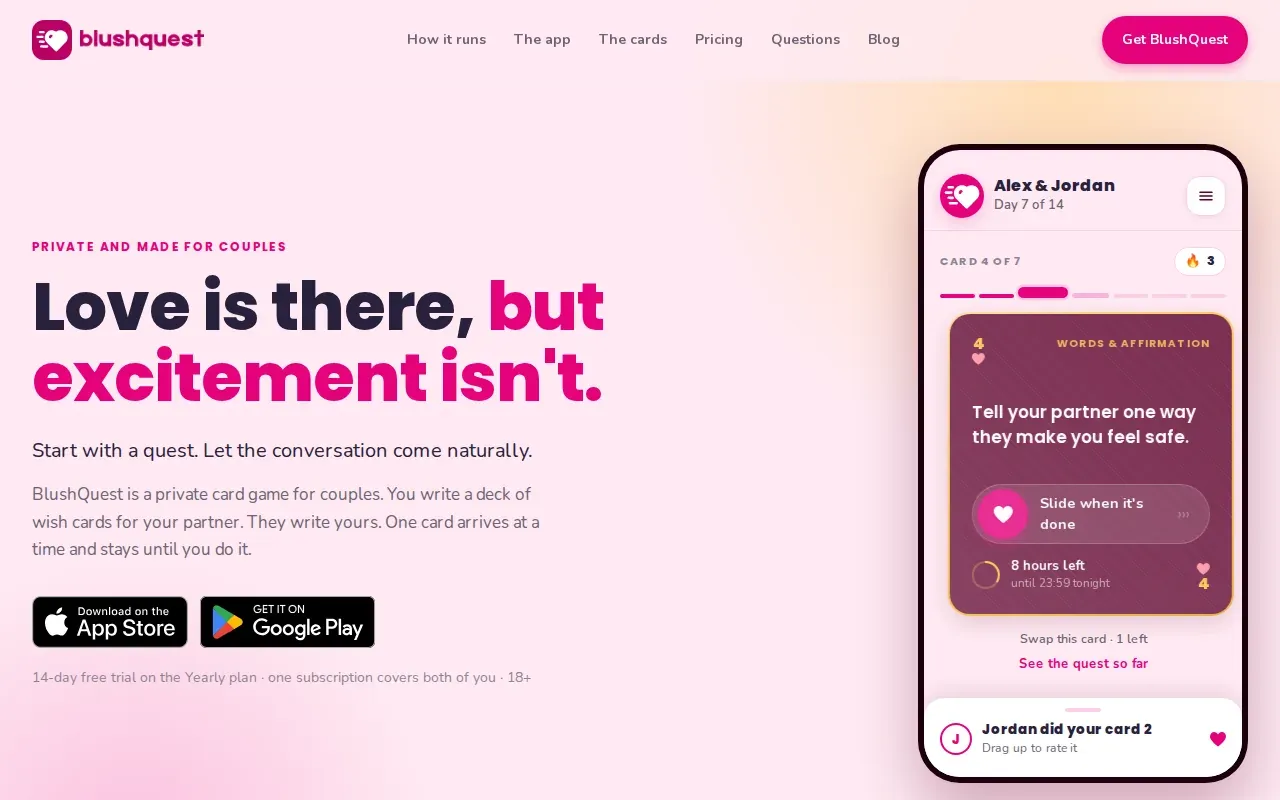
It fits couples who work well as a team but miss attention, affection, play, or romance. One partner creates a quest with seven or 15 cards. You can choose from more than 300 curated ideas or write every card yourself. The quest builder selects which categories are in play and sets a two-day or four-day card window.
Then comes the important part. The invitation can be a surprise, but participation can't be. The invited partner chooses whether to accept and prepares cards in return. That small consent step makes the start feel playful instead of pushy.
Cards appear one at a time. The person who completes a card does so inside its window. The partner who wrote it rates the experience from zero to five. On-time cards build a streak and raise the couple level. At the end, ratings, timing, and each partner's final streak decide the Quest Champion. Badges mark progress along the way.
That structure gives conversation somewhere to go. You might talk about why a card felt good, what surprised you, or what you'd like to try next. The action comes first. The words can follow when they feel natural.
BlushQuest is adults-only and made for committed couples. It isn't therapy, crisis support, or a way to get an unwilling partner involved. One subscription covers both partners, and only the sender needs an active subscription. If you want a couples game built around personal wishes rather than a generic question feed, this is the clearest fit.
2. Paired - Guided daily prompts for couples building a regular check-in habit
For short daily conversation starters for couples, Paired centers the habit on quick check-ins. That suits partners who want a small ritual rather than a long evening activity.
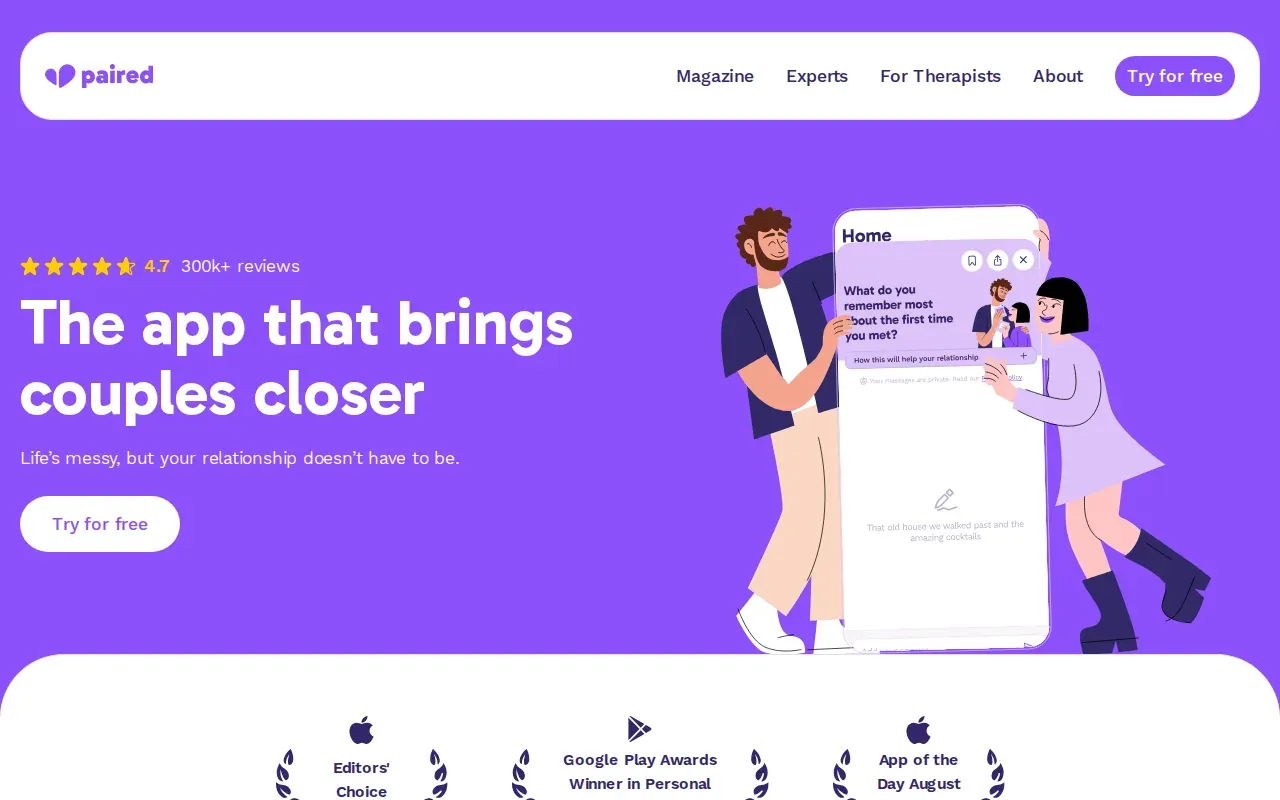
The app includes daily questions, quizzes, and games. Paired says it has expert-led quizzes and games, with topics that include household life, play, desire, and intimacy. The format is simple: each partner answers, then responses help open a discussion.
That reveal pattern works well when one person usually carries the emotional labor. You don't have to invent a deep question after a long day. You answer first, see where your partner went, and follow the thread that feels worth talking about.
Paired also positions itself for busy couples. A short check-in can happen during a quiet coffee, after dinner, or while you're both waiting for a show to start. The short format lowers the barrier to starting. It doesn't require a full date night or a carefully planned mood.
The app's expert-led approach may appeal to couples who want more guidance around communication.
The trade-off is choice. Paired is built around guided content and a repeat daily rhythm. If you want your partner to write a card specifically for you, or if you want timers and a shared quest score, another app may feel more personal.
Pick Paired when a short daily check-in sounds doable. The habit matters more than waiting for a perfect night.
3. Coral - Encrypted partner-chat prompts for more intimate conversations
Coral is for couples who want conversation starters with a stronger focus on intimacy, communication, and private partner chat. Its encrypted partner chat is designed to help couples spice things up.
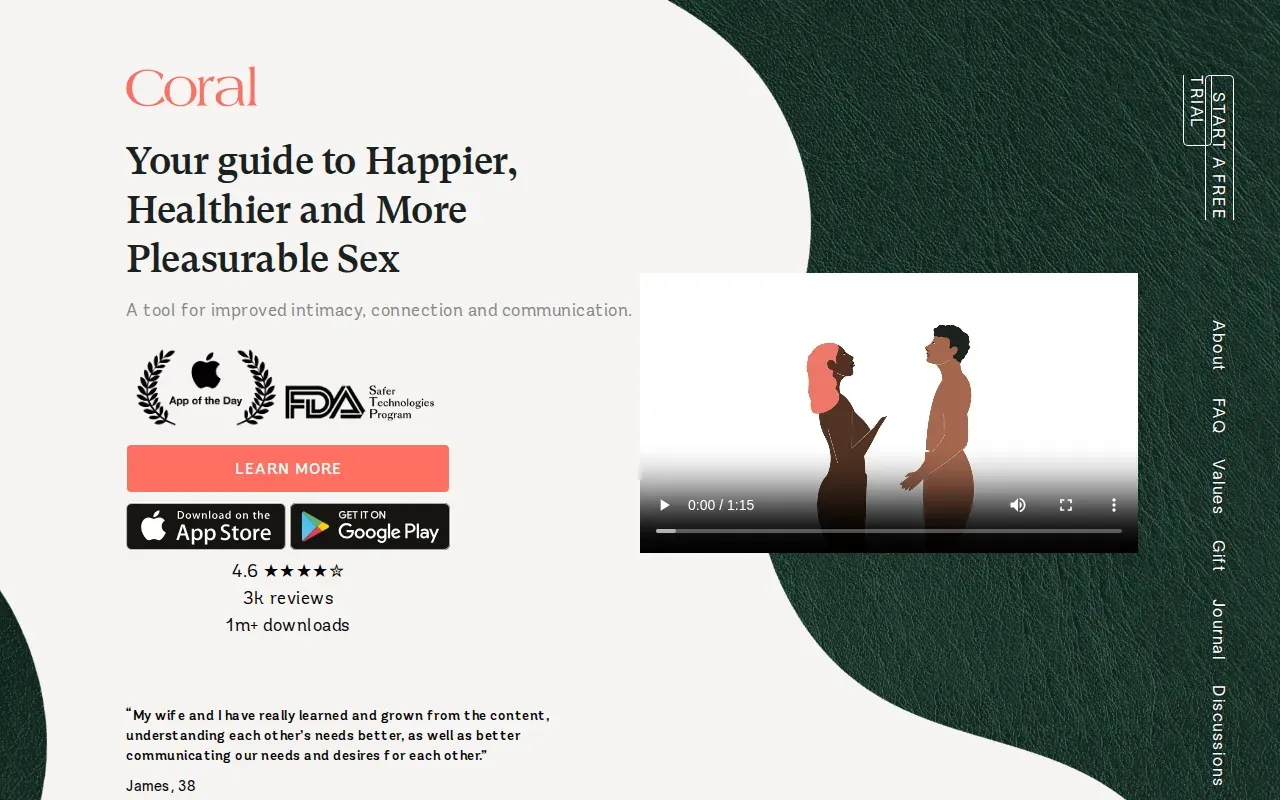
The chat format gives couples room to answer in their own time. That can help when one partner needs a little longer to think before sharing. Instead of producing an answer face to face, you can write, read your partner's response, and return to the topic when you have more space.
Conversation prompts can help make room for connection when routines have crowded it out. You can write, read your partner's response, and use the exchange to open a more thoughtful conversation about closeness.
That focus makes Coral a useful option for couples who already know they want to talk about intimacy. It can give shape to subjects that otherwise stay vague. A prompt might help you name a preference, share a hope, or ask what helps you feel connected.
Privacy deserves a close look here. Coral offers encrypted partner chat, but couples should still read the current privacy terms before entering sensitive information. The app should support a conversation, not replace professional help when a topic feels unsafe or too hard to handle alone.
The limitation is scope. Coral focuses on conversation prompts and encrypted partner chat. It won't suit every couple looking for a playful action game, a broad date idea library, or partner-authored cards with a clear time window.
Choose Coral when the conversation itself is the main event, especially if you want a private chat space with a more intimate tone.
4. Connected - Async couple prompts with a partner-code invitation
Connected suits couples who want conversation starters that can happen asynchronously. You and your partner don't need to answer at the same moment. The app combines prompts with check-ins, assessments, reflections, and other relationship tools.

Its prompt library includes more than 700 questions across themed packs. The range runs from light icebreakers to deeper subjects about values, intimacy, and the future. You can answer when you have time, which helps couples with different work hours or uneven energy at night.
Connected requires a partner code invitation. You create an account, share your unique code, and connect before the shared experience syncs. That flow gives both people a clear point of entry. It also means you can't treat the app as a solo activity and assume your partner is already involved.
The app adds daily questions, mood pulses, weekly reflections, and shared action items. It also lists games such as Would You Rather and Never Have I Ever. Those choices make it useful for couples who want more than question cards, especially when a quick game feels easier than a deep talk.
Connected also describes assessments around communication patterns, attachment patterns, and boundaries. Treat those as conversation aids, not diagnoses. A quiz can give you a word to discuss. It can't explain your whole relationship or replace a trained professional.
The trade-off is breadth. There are many tools to explore, so couples who want one focused game may find the app busier than needed. The partner-code step also adds a little setup before the first prompt.
Connected makes sense when you want a shared relationship workspace and asynchronous answers. It is less suited to couples who want a short, tightly paced quest with partner-written cards.
5. Lovewick - A large free library of questions for casual couple check-ins
Lovewick is a free app for couples with 1,000+ free questions. It gives couples a large bank of conversation starters for a road trip, a dinner at home, or a quiet moment before bed.
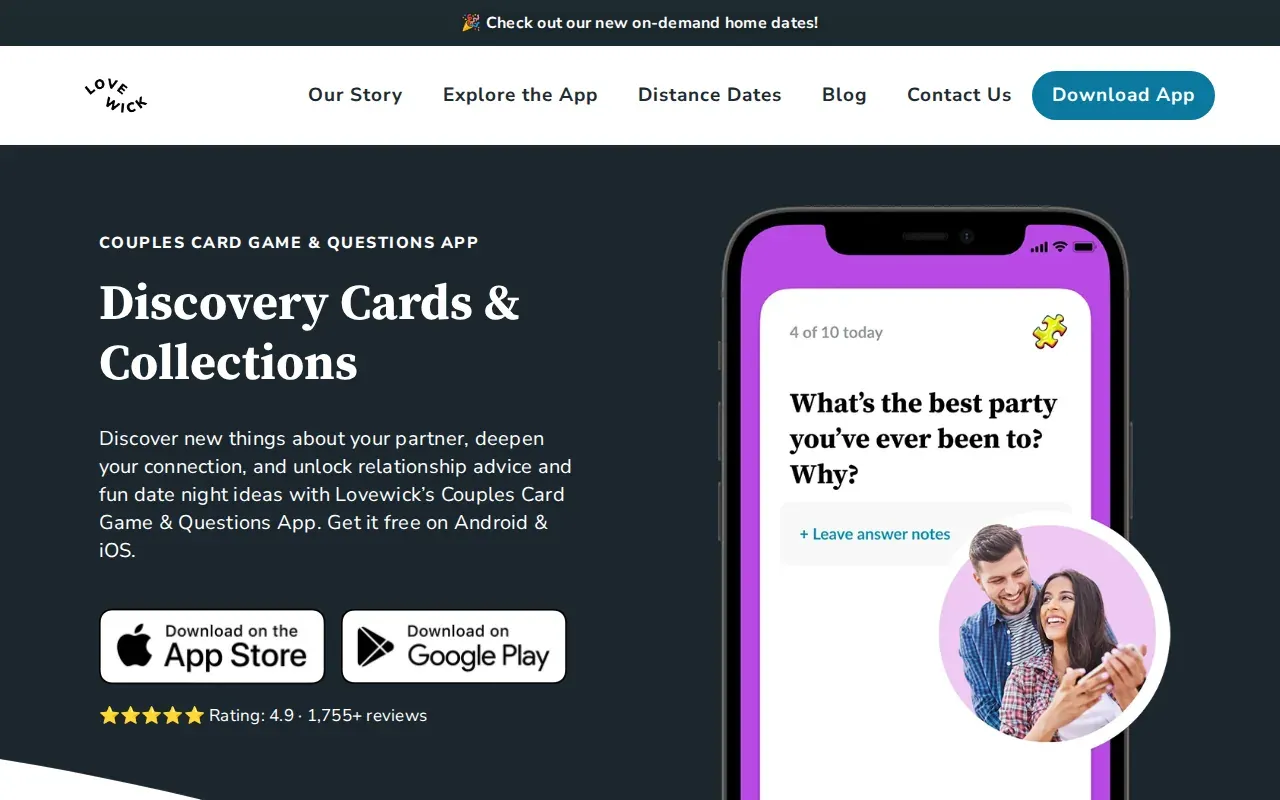
That size is the main draw. You can pull a question for a road trip, a dinner at home, or a quiet moment before bed. The library also covers different stages and moods, so you're less likely to see the same style of prompt every time.
These tools can help when thoughtful details disappear inside a busy week. You can save a favorite, a date, or an idea for later instead of hoping you'll remember it.
The caveat is focus. A large library gives you many choices, but choice can also create a small decision problem. If you open the app after a long day and see hundreds of possible directions, you may spend more time browsing than talking.
Use Lovewick when you want lots of questions and flexible browsing. It is a strong fit for casual check-ins, while a quest-based tool suits couples who need a clearer rhythm.
6. Couply - Relationship prompts for couples who want to stay on the same page
Couply is aimed at partners who want prompts that help them stay on the same page. Its central message is about keeping both people aware of the relationship rather than letting daily logistics take over every exchange.
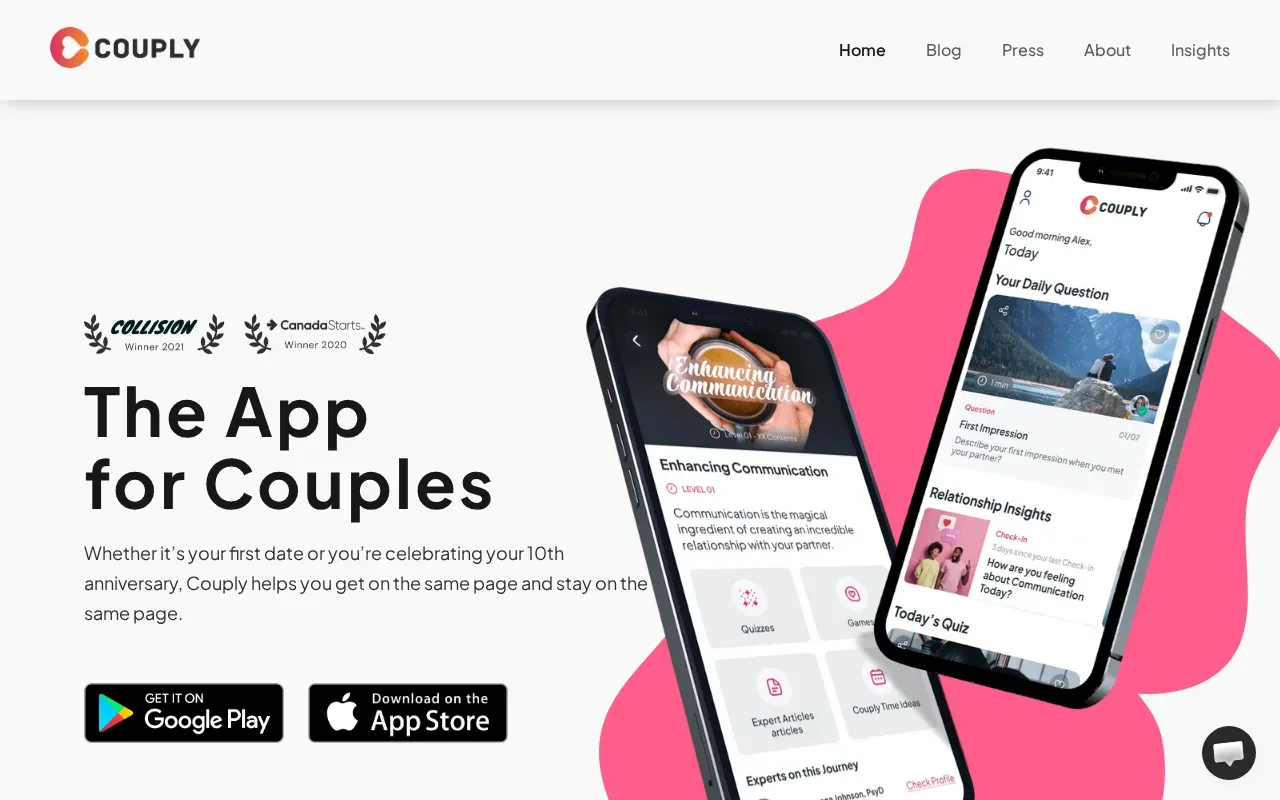
That framing fits couples who talk often but mostly about plans, chores, work, or errands. A prompt can shift the subject without making one person announce, “We need to talk.” It gives you a neutral starting point for curiosity.
Couply is also a useful name to consider if you prefer a relationship app over a card game. The experience is prompt-led, so the main work happens through answering and discussing. You can bring the question into a walk, a meal, or a short check-in before sleep.
For many couples, the test is not whether an app has a clever question. It's whether both partners will return to it. A simple prompt that you answer twice a week may help more than an impressive library that sits untouched.
Review the current product details before you commit to a paid plan or expect a particular feature.
It may fit you if the phrase “same page” feels familiar. You want a gentle nudge toward shared awareness, not a competitive score or a large menu of activities.
For a broader offline option, you can also turn a single prompt into a short game with rules you make together. The trick is to stop after one good thread instead of forcing a whole deck in one sitting.
7. Flamme and Cohesa - Prompt-led alternatives with games, activities, or partner choice
Flamme and Cohesa take different routes through conversation starters for couples. Flamme leans into decks, games, habits, and several device options. Cohesa puts more weight on partner choice, question swipes, and curated activities.

App | What stands out | Good fit for | Watch for |
|---|---|---|---|
Flamme | More than 140 hand-written questions across seven decks, plus couple games and milestone widgets | Couples who want prompts mixed with game-like progress | The wider feature set may feel like more than you need for one quick talk |
Cohesa | More than 180 questions, swipe choices, curated courses, and a partner invitation | Couples who want to mark an answer as yes, no, or maybe | Its activity-led approach may suit some moods better than simple daily questions |
Flamme lists iOS, Android, and Web access. That is useful if you don't want the experience tied to one phone. Its decks give you a way to pick a mood, while milestone widgets and couple games add a sense of progress.
The catch is that more modes can split attention. If your goal is one calm question after dinner, you may prefer an app with fewer choices. If you enjoy switching between a prompt and a game, the variety could keep the ritual fresh.
Cohesa uses a different kind of filter. Its question flow asks partners to swipe yes, no, or maybe, then it points toward activities from curated courses. The partner receives an invitation, so both people have a clear role before the shared experience begins.
That choice model can help couples discuss comfort without needing to explain everything in one long conversation. A “maybe” leaves room to return to a subject later. It also avoids treating every prompt as an instruction.
These two apps are worth comparing when your priority is play, activity choice, or device access. For a more personalized route, BlushQuest lets partners write cards for one another and sets a clear window for each card instead of relying on a large shared feed.
FAQ: Conversation Starters for Couples
What is the best app for conversation starters for couples?
The right app depends on how you want to connect. BlushQuest fits couples who want partner-written wish cards and a private quest. Paired suits short daily check-ins. Lovewick gives you a large free question library, while Connected adds asynchronous questions and broader relationship tools.
Are couples conversation apps worth using?
Couples apps can be useful when they remove the pressure of inventing a topic. A question gives you a starting point, but the value comes from what you do with the answer. Choose a format you will actually open, then stop when the conversation feels complete.
How do you start a meaningful conversation with your partner?
Start with one specific question for your partner and give them time to answer. Ask what made them choose that response instead of jumping to advice. A shared activity can also help.
Are conversation apps private?
Privacy depends on the app, so read its current privacy policy before sharing sensitive details. Look for clear information about account pairing, stored answers, chat security, and data use. Also agree with your partner about what belongs in the app. Privacy is a shared habit, not only a setting.
Can a couples app replace therapy?
No, a couples app can't replace therapy or crisis support. It can give willing partners a question for a calm check-in, or help them name a topic to discuss with a professional. If a conversation feels unsafe or goes beyond what you can handle together, pause the app and seek qualified support.
Conclusion
If you want an action-first way to feel more like a couple, try BlushQuest: write a small set of wish cards, invite your partner, and let one shared moment open the conversation. Start with a private quest at BlushQuest, and keep the first card easy enough that both of you want to play again. If you want the wider view, our roundup of the best apps for couples and our games for couples comparison cover the same ground from different angles.