


Couples can run a home, a calendar, and a whole life together while missing the feeling of being a couple. A playful app can help, but each one creates connection in a different way. Here are six options, plus the kind of couple each one suits.
Table of Contents
- BlushQuest
- StayClose, A Playful Dice Game for Shared Spontaneity
- Paired, Daily Questions and Exercises for Consistent Connection
- Lovify, A Large Question Library for Fresh Conversation
- Lovewick, Date Night Planning and Shared Wishlists
- Agapé, A Double-Blind Daily Question for Honest Reveals
- Which Option Fits Your Relationship Right Now?
- FAQ: How to Spice Up Your Relationship
- Conclusion
1. BlushQuest
Tonight, instead of adding another serious talk to the calendar, start with a quest. BlushQuest is a private couples game where partners write wish cards for each other.
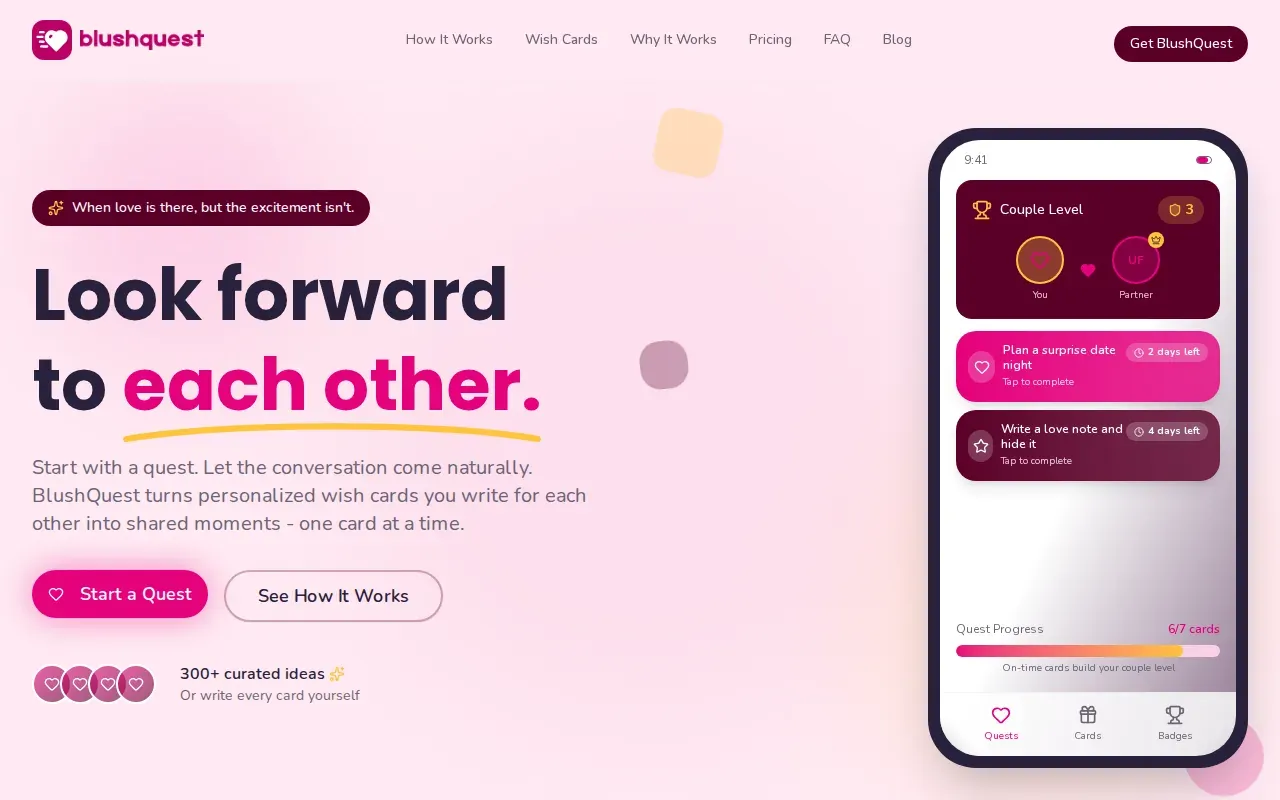
It fits couples who work well as a team but want more affection, romance, play, or physical closeness in ordinary weeks. One partner creates a quest with seven or 15 cards. You can pick from more than 300 curated ideas, or write every card yourself.
Choose the mood first. Categories include Affection and Romance, Flirting and Anticipation, Playful Intimacy, Sensory Touch, Care and Support, plus Shared Experiences. Then choose a two or four day card window and send a private invitation.
The invited partner gets a real choice. They can accept or decline, then prepare cards in return. That detail matters. You can surprise your partner with an invitation, but participation must stay mutual. Agreement should be voluntary rather than assumed.
Cards appear one at a time. Each partner has an active card, a clear time window, and a small reason to follow through before the moment slips away. Completing a card on time builds a streak and raises the couple level. Ratings, timing, and each partner's final streak help decide the Quest Champion. Badges mark progress along the way.
That mix gives wishes somewhere to go. Instead of saying, “We should make more time,” one card might turn that wish into a slow evening walk, a note left in a coat pocket, or a shared sensory activity. The action comes first. Conversation can follow when it feels natural.
BlushQuest is adults-only and made for committed couples. It isn't therapy, crisis support, or a dating service. It also isn't a magic trick for persuading a reluctant partner. If mutual interest isn't there, the invitation should remain an invitation.
One subscription covers both partners, and only the person sending the invitation needs an active subscription. If you want a private couples card game with a clear rhythm, personal wishes, and a little friendly competition, BlushQuest gives you a strong place to begin.
2. StayClose, A Playful Dice Game for Shared Spontaneity
Want something quick and a little cheeky? StayClose uses a digital dice mechanic with a shared board, so both partners roll at the same time.
It suits couples who enjoy chance, light competition, and a clear game board. The shared roll gives you an instant next move. You don't have to spend ten minutes choosing between six date ideas while one person scrolls and the other waits.
The game includes board progression. A winner can earn a real-life wish, which gives the roll a small prize beyond the screen. That can work well when you both enjoy playful stakes and know how to keep the tone kind.
StayClose is also a useful fit for a short evening reset. Imagine both of you have 20 minutes after dinner. A shared roll can decide who gets the wish, then you can act on it while the night still has some energy left.
The trade-off is depth. Based on the available description, the dice and board create the main play loop. The product doesn't give the same level of personal card writing or category choice described for BlushQuest. If you want your partner's wishes to shape each round, a partner-authored game may feel more personal.
Consent still belongs in the room. A prize should feel fun, not like a debt. Agree on the kinds of wishes that are welcome before you start, especially when one partner prefers low-key play.
Pick StayClose when the goal is simple: roll together, move the board, and let chance choose the next spark. One practical note: StayClose is on Google Play only, so an iPhone household cannot both play.
3. Paired, Daily Questions and Exercises for Consistent Connection
If you want a five minute habit, Paired gives you a daily relationship question, quiz, or exercise. It works well for couples who like small check-ins that fit around a busy day.
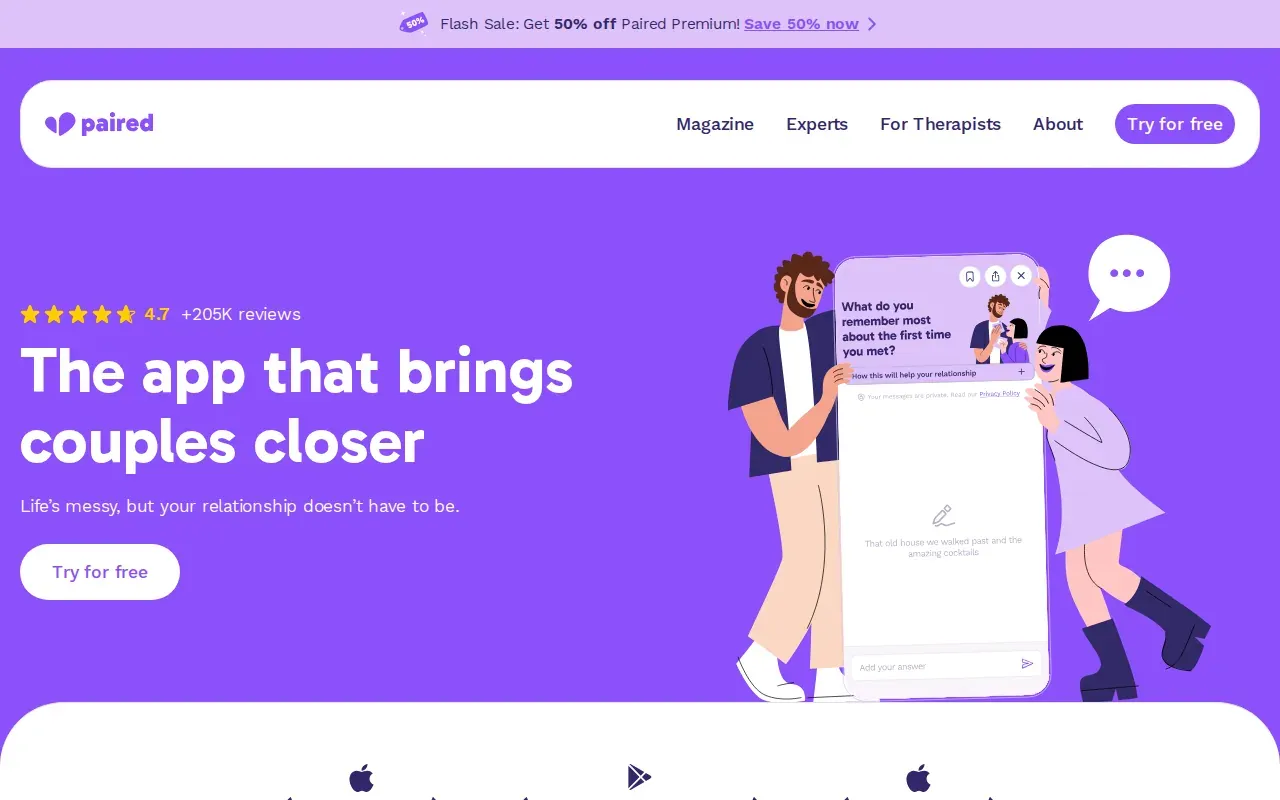
The app includes expert-led quizzes and games. Its topics include sex, desire, and intimacy, so it can move beyond the usual “How was your day?” question. The short format may suit couples who want a nudge without planning a full date.
That daily rhythm is the main appeal. One question at lunch can become a longer chat after dinner. A quiz about desire might help you name a preference. An exercise about teamwork may show where one of you needs more support during a packed week.
Paired lists iOS and Android support.
The limitation is the same feature that makes it easy to start. A daily feed can become one more notification. If you answer on autopilot, the habit may lose its bite. It also puts the app's questions at the center, rather than asking both partners to write specific wishes for each other.
Try a simple rule if you use it. Don't rush to the next question. When one answer surprises you, pause there. Ask one follow-up and let the conversation grow past the card.
Paired makes sense for couples who want guided daily connection. It may feel less satisfying if your main need is shared action, surprise, or a game with a clear finish line.
4. Lovify, A Large Question Library for Fresh Conversation
When the problem is “we keep having the same chat,” Lovify gives you a large bank of questions to change the subject. It has more than 800 questions across ten categories.

Lovify suits couples who enjoy talking and want lots of choice. You can pull a question for a quiet dinner, a long drive, or a video call. The range also helps when one partner wants light conversation and the other wants something more personal.
A large question bank can make planning easy. Pick one category before the evening starts. Then give each answer room to breathe. A question about childhood may lead to a family story. A question about attraction may open a talk about what helps you feel wanted.
Access to an app won't solve a low appetite for talk. One person may enjoy questions while the other would rather do something together.
There is also a risk of question fatigue. Even a big library can feel repetitive if every answer stays inside the app. Use the question as a door, not the whole room. Put the phone down after the first answer and make space for eye contact, touch, or a shared activity.
Lovify is a good match for couples who want breadth. Choose something else when you want the app to turn a private wish into a timed action.
5. Lovewick, Date Night Planning and Shared Wishlists
For couples who keep saying “we should do that sometime,” Lovewick brings date ideas and shared wishlists into one place. It also includes question cards, reminders, notes, and a relationship memory timeline.
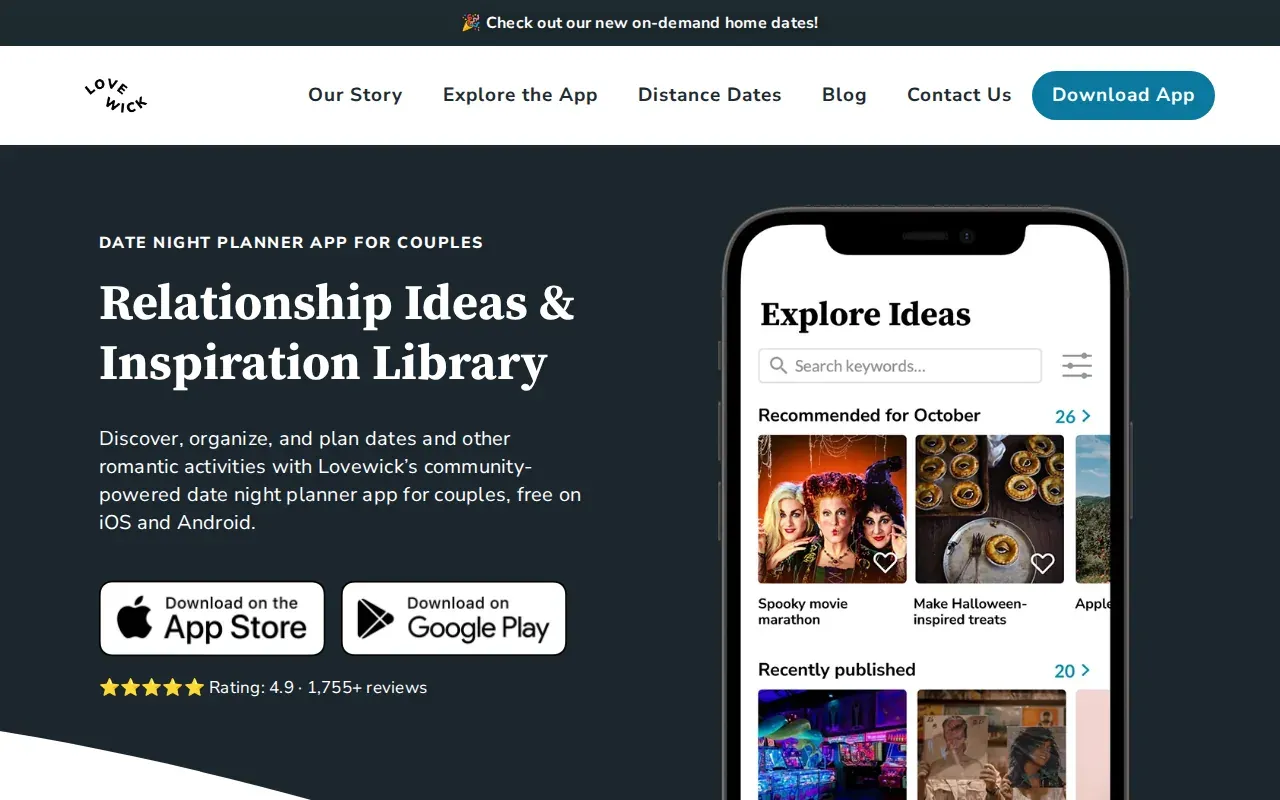
Lovewick suits planners. You can browse more than 1,000 couple questions and hundreds of date ideas, then save ideas to a shared wishlist.
That makes it useful for ordinary constraints. If you have 45 minutes, look for a short idea. If you can't leave home, choose something that works in the kitchen or living room. If you are apart, select a video-call activity instead of saving a date you can't schedule.
The app also has a place for small details. You can save preferences, important dates, and notes about what your partner likes. Those reminders can help when thoughtful ideas vanish under errands and work.
Lovewick's memory timeline adds a record of shared experiences. Checking off a date or adding a note can make progress visible. That may appeal to couples who enjoy keeping a record of trips, milestones, or small wins.
The catch is follow-through. A wishlist can become a pretty storage box for plans that never leave the screen. Pick one idea before the week begins, set a time, and keep the plan modest enough to happen.
Lovewick is strongest when you need date inspiration and a place to organize it. It is less suited to couples who want each partner to write wishes that appear one card at a time.
6. Agapé, A Double-Blind Daily Question for Honest Reveals
Agapé uses one daily question and a double-blind reveal. You answer first, then see each other's responses after both partners reply.
That structure suits couples who want more honesty in their answers. You can't shape your response around what your partner already wrote. The first answer comes from you, which can make the reveal more interesting.
The app also describes a point system tied to engagement. Response length, speed, and repeated participation can affect points. Treat that as a nudge rather than a verdict on the relationship.
Agapé requires both partners to respond before the answers appear. That can create a satisfying shared reveal. It can also create friction when one person is busy, forgets, or doesn't feel like answering that day.
The daily format is best for couples who enjoy written reflection. If you want to move from a question into a real activity, you'll need to make that next step yourself. A question can start a conversation, but it won't book the walk or light the candles.
Choose Agapé when the reveal is the fun part. Choose a quest format when you want the answer to become an action.
Which Option Fits Your Relationship Right Now?
What actually helps depends on what feels missing this week. You may need a nudge to talk. You may need a date plan. Or you may want a shared game that makes effort visible. If you would rather compare products side by side, our roundup of the best apps for couples sets them out in a table.
What you want | Option to consider | How it works | Watch for |
|---|---|---|---|
Personal wishes turned into shared moments | BlushQuest | Partner-authored cards, timed play, streaks, levels, badges, and a Quest Champion | Both partners must willingly accept and take part |
Fast chance-based play | StayClose | Partners roll a digital die and progress on a shared board | The main mechanic has less personal writing |
A daily five minute check-in | Paired | Questions, quizzes, and exercises arrive each day | A daily feed may become easy to skip |
A large question bank | Lovify | Curated questions cover many conversation categories | You still need to turn talk into action |
Date ideas and shared planning | Lovewick | Save ideas, build wishlists, track memories, and set reminders | Plans need a real date and time to happen |
Private written reveals | Agapé | Both partners answer before either response appears | The reveal depends on both people replying |
Start with the format you are most likely to use. A brilliant question library won't help if neither of you likes answering questions. A game won't help if one partner feels watched or pushed.
For a softer first move, send an invitation rather than making a demand. You can also pair an app with a small offline plan, such as dessert after dinner or a ten minute walk. The point is to make connection easier to begin.
If you want more low-pressure ideas for listening, affection, and play, these ways to reconnect with your partner tonight can help you choose a first move without turning it into a big relationship meeting.
FAQ: How to Spice Up Your Relationship
How can I spice up my relationship without spending much?
You can make an ordinary week feel different with a planned walk, a handwritten note, a shared question, or a home date. Pick one small idea and set a time for it. The plan should feel easy enough to happen this week. A short shared moment often works better than an ambitious plan that stays on your wishlist.
What is a good game for couples?
A good game for couples matches your preferred kind of play. BlushQuest suits partners who want personalized wish cards, timed turns, and shared progress. StayClose suits couples who prefer dice and chance. Agapé works better for private written answers. Pick the format that feels inviting to both people.
How do I bring up intimacy with my partner?
Bring up intimacy with a low-pressure invitation rather than a complaint. You might say, “I miss feeling close. Would you try something playful with me this week?” Give your partner room to answer honestly. A wish card or gentle question can help when saying the whole thought aloud feels too exposed.
Can relationship apps really help couples feel closer?
Relationship apps can help when they lead to a shared action or honest exchange. They can't replace willingness, care, or consent. Use an app as a question for what happens next. Put the phone down when a question opens a useful talk, or complete the activity before the moment passes.
What should I do if my partner doesn't want to participate?
Respect your partner's answer and don't turn the invitation into pressure. You can suggest a smaller option, such as a walk or meal together, but accept a no. Participation needs to be mutual. A surprise invitation can be sweet. A surprise demand is a different thing.
Conclusion
If you want more than another question feed, try a small private quest with BlushQuest. Pick a few wish cards that feel comfortable for both of you, invite your partner, and let the first shared moment open the door. Start your BlushQuest invitation when you're ready to play.