

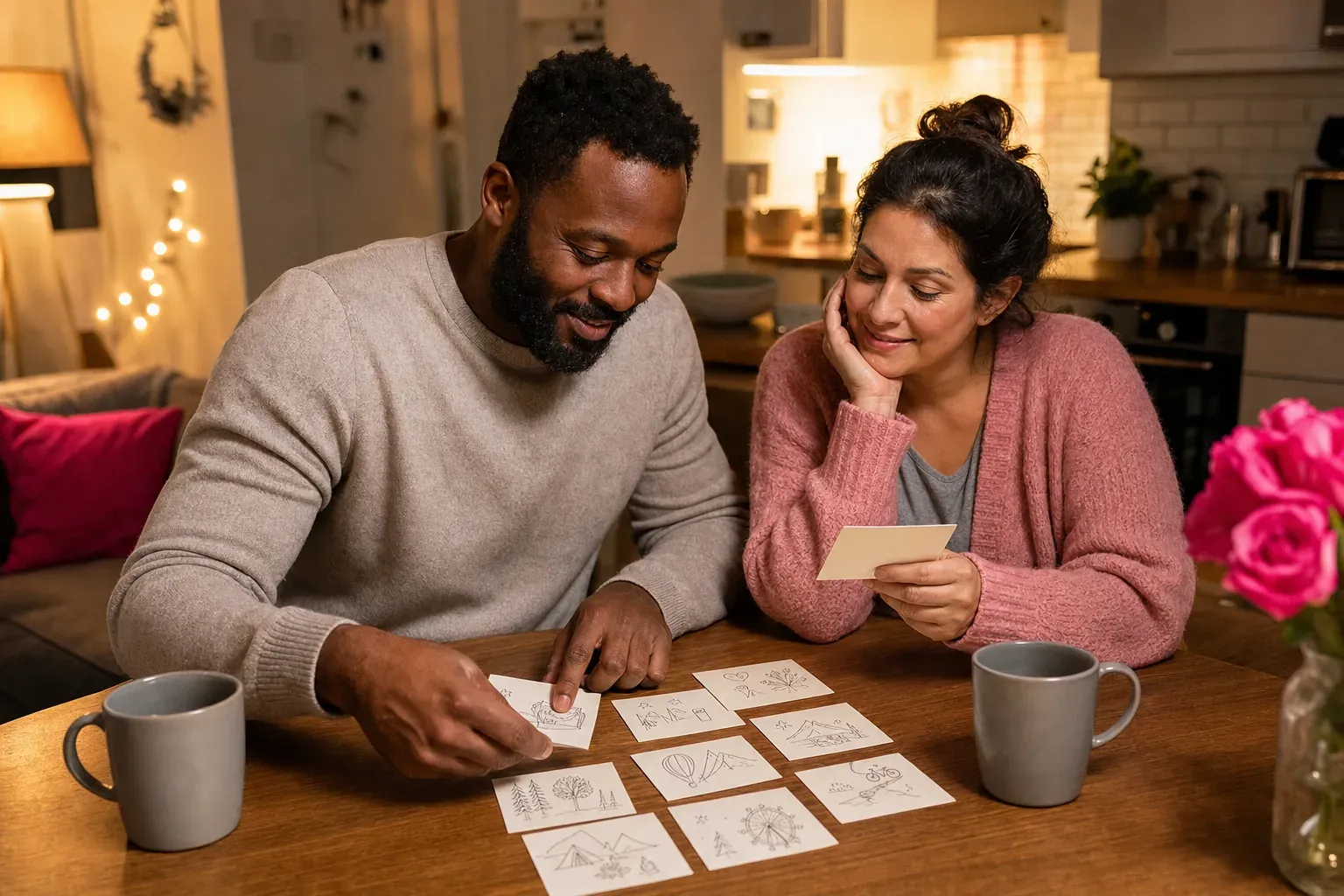
A good date doesn't need a big budget or a free weekend. It needs a little thought, a shared plan, and room for both of you to enjoy it. Use these steps to choose fun date night ideas for couples that fit your energy tonight, whether you go out, stay in, or add a playful twist to your usual routine.
Table of Contents
- Step 1: Match the Date to Your Time and Energy
- Step 2: Choose a Date Style You Will Both Enjoy
- Step 3: Add One Playful Twist to Make It Feel Like a Date
- Step 4: Make the Plan Feel Easy, Mutual, and Low-Pressure
- Step 5: Create a Date Night You Can Enjoy at Home
- Step 6: Turn One Good Idea Into a Shared Rhythm
- FAQ: Fun Date Night Ideas for Couples
- Conclusion
Step 1: Match the Date to Your Time and Energy
Fun date night ideas for couples work better when they match the night you actually have. Start by checking your time and energy before you pick the activity.
Ask two quick questions:
- How much time can we protect?
- How much effort sounds good right now?
A date after a long workday needs a different shape than a free Saturday night. If you have 20 minutes, try a balcony snack, a short walk, or a quick round of questions. If you have two hours, cook together or plan a small outing. If you have most of the evening, add a meal and a second activity.
Energy matters just as much. A low-energy night might call for a movie with a special snack, a puzzle, or a living room picnic. A high-energy night could include rock climbing, ballroom dancing classes online, or a walk to watch the sunset.
Don't confuse effort with care. Setting out two mugs and switching off your phones can change the feel of an ordinary evening. A small plan may suit you better than a grand one that leaves someone tired before the date starts.
At-home dates often win because they remove travel time and the need for a sitter. Our date night at home ideas include game night, tasting parties, a home hotel setup, karaoke, and themed meals as ways to make a familiar space feel different. You can borrow that approach without copying the whole plan. Pick one detail that changes the mood.
Try this simple energy filter:
- Very low: Choose a cozy activity with almost no setup.
- Low: Add one small ritual, such as candles or a shared dessert.
- Medium: Pick a game, recipe, or creative project.
- High: Plan movement, competition, or a new place.
Choose one you can finish without watching the clock.
Make the first decision together. You can say, “Do we want cozy, playful, or adventurous tonight?” That question is faster than scrolling through endless lists.
Step 2: Choose a Date Style You Will Both Enjoy
Now choose a style for your date night. The best idea on paper can fall flat if it belongs to only one person's idea of fun.
Start with three broad styles:
- Cozy: Stay home, eat something nice, watch a film, or read together.
- Playful: Try a board game cafe, trivia, karaoke, or a friendly cook-off.
- Adventurous: Go birdwatching, try rock climbing, explore a new food spot, or attend a local event.
Then ask each other to choose one style. If you pick different answers, combine them. A short walk can lead to a cozy meal. A competitive game can end with dessert. A new restaurant can include a slow stroll afterward.
Season and setting can help. Warm weather may make an outdoor meal, stargazing, or a local concert feel easy. Cold weather may point toward a home tasting night, a puzzle, or an online dance lesson. The point isn't to chase novelty every week. It is to notice what fits your mood.
One date idea collection suggests keeping a calendar of seasonal activities while leaving room for new experiences. That balance works well. Keep a few reliable choices in reserve, then add one fresh idea when you both have the energy for it.
If you want a more unusual plan, try a two-part date. Spend the first half doing something active. Use the second half for food and talk. That change of pace keeps the evening from feeling like one long block.
For food, keep the choice narrow. Pick a theme instead of searching every menu in town. You could make a meal inspired by a place you want to visit, share several desserts, or compare two takeout dishes. If a future trip is part of the fantasy, planning it can become part of the date.
For couples who want to stay indoors, choose the activity before the screen. A movie can work well when you each take a turn picking one from your childhood. Talk about why it mattered before you press play. That small exchange gives the night a shared point of view.
BlushQuest can fit this step when you want a date with more structure. One partner makes a private quest from 7 or 15 wish cards. You can choose among 300+ curated ideas or write custom cards across areas such as Affection & Romance, Care & Support, and Shared Experiences. The invited partner chooses whether to accept, so the surprise is the invitation, not participation.
Choose a style that lets both people show up as themselves. A date should feel like an invitation, not an audition.
Step 3: Add One Playful Twist to Make It Feel Like a Date
Tonight, instead of letting the evening blur into the usual routine, add one small twist. A little play can make a simple plan feel marked out for the two of you.
Pick one twist from this list:
- Give the night a theme, such as “Paris at home” or “childhood favorites.”
- Take turns choosing the next part of the evening.
- Set a short timer for a silly creative round.
- Dress one step nicer than usual, even if you stay home.
- Make a tiny prize for the person who wins the game.
- Write one note about something you noticed or liked that day.
Keep the twist small. If it takes longer to set up than the date itself, it has become another chore. A playlist and a dessert can be enough. So can eating on a blanket in the living room instead of at the table.
Try a “guest rules” night. Pretend one of you is visiting the other person's city for the first time. The host picks the meal and one activity. Next time, swap roles. This works at home because it changes who gets to lead without making either person plan every detail.
You can also use a reveal. Put three activity names in separate envelopes. Each person removes one envelope, then you choose the option that sounds good to both of you. Leave the rest for another night.
Games work because they give you something to do while conversation happens. A two-person puzzle, a guessing game, a shared playlist, or a quick quiz can open new topics without making the night feel like an interview.
The word “gamification” means adding game-like elements to a non-game activity. These can include features such as points, progress, and competition. You don't need a full scoring system at home. One round, one winner, or one badge made from a sticky note can provide enough lift.
Keep competition kind. Agree on the rules before you start. Let either person skip a round if the mood changes. The point is shared amusement, not proving who has the sharper memory or better cooking skills.
BlushQuest uses playful structure in a more personal way. Each partner writes wish cards for the other. Cards appear one at a time, and completing them on time builds a streak and raises the couple level. Ratings, timing, and each partner's final streak determine the Quest Champion. A tie can leave you with no single Champion, which is probably healthier than fighting over a tiny digital crown.
When the twist feels natural, the date can stay simple. That is the sweet spot.
Step 4: Make the Plan Feel Easy, Mutual, and Low-Pressure
Good date night ideas for couples need a clear plan, but they shouldn't feel like an assignment. Make the invitation easy to accept or decline.
Start with a specific request. “Are you up for 30 minutes together after dinner?” works better than “We should do something sometime.” Give your partner enough detail to picture the evening. Mention the time, the effort, and the mood.
Try this script:
“I miss having a little couple time with you. Would you like a low-key date tonight? We could make dessert and play one game for 30 minutes. If you're wiped out, we can choose another night.”
That last sentence matters. It leaves room for an honest answer. A date only feels good when both people can choose it.
Agree on the basics before you begin:
- How long will the date last?
- Will phones stay nearby?
- Who handles food or cleanup?
- What happens if one person loses energy?
Don't make one partner carry the whole mental load. Split the plan. One person can choose the activity while the other handles the snack. Or alternate who leads each date.
Expectations matter at home. One person may picture a quiet talk. The other may picture a loud game and takeout. Neither person is wrong, but the mismatch can sour the evening. Say what you want before the first card is dealt or the first film starts.
Keep the plan short enough to survive a busy week. A 20-minute mini date can count. Sit outside with a drink. Share one dessert. Take a walk around the block. Read a few pages from the same book. Small windows still give you a chance to choose each other.
If one partner isn't interested, don't push. You can make your own plan for the evening or ask what kind of time together might feel better later. BlushQuest follows the same rule. The invited partner chooses whether to accept, and both partners write cards in return after accepting. It is private and made for two, but participation stays mutual.
For intimate categories, keep the language clear and the choice shared. Affection & Romance, Flirting & Anticipation, and Sensory Touch can describe a mood without telling someone what they must do. A card should express an invitation, not create pressure.
End the night before either of you feels wrung out. Leaving a little appetite for the next date is a win.
Step 5: Create a Date Night You Can Enjoy at Home
Tonight, let home do the heavy lifting. At-home date nights can feel special when you change one visible detail and protect the time.
First, pick a start signal. Light a candle safely. Put on a playlist. Move dinner to a different room. Change into comfortable clothes that still feel intentional. A start signal tells your brain that the evening has shifted.
Next, choose one main activity. Avoid building a six-part itinerary after an exhausting day. Use a simple formula:
- One shared food or drink.
- One activity that keeps you side by side.
- One closing moment, such as a walk or short chat.
Try a tasting night with cookies, fruit, ice cream, or takeout. Put each option on a plate and rate it for taste, texture, or surprise. You don't need special gear. Paper and a pen will do.
Try a home hotel night. Tidy one room, set out fresh towels, and serve a snack on a tray. The goal isn't to copy a luxury hotel. It is to make the familiar feel slightly new.
Try a creative night. Paint side by side, make a shared playlist, design a dream room, or work on a small craft. Making one small thing together gives the evening a clear start and an object that outlasts it. Choose colors for memories, moods, or inside jokes.
Try a memory night. Look through old photos or watch short clips from past trips. Ask one question about each memory: “What do you remember that I might have missed?” This can lead to warm stories without turning the evening into a serious relationship talk.
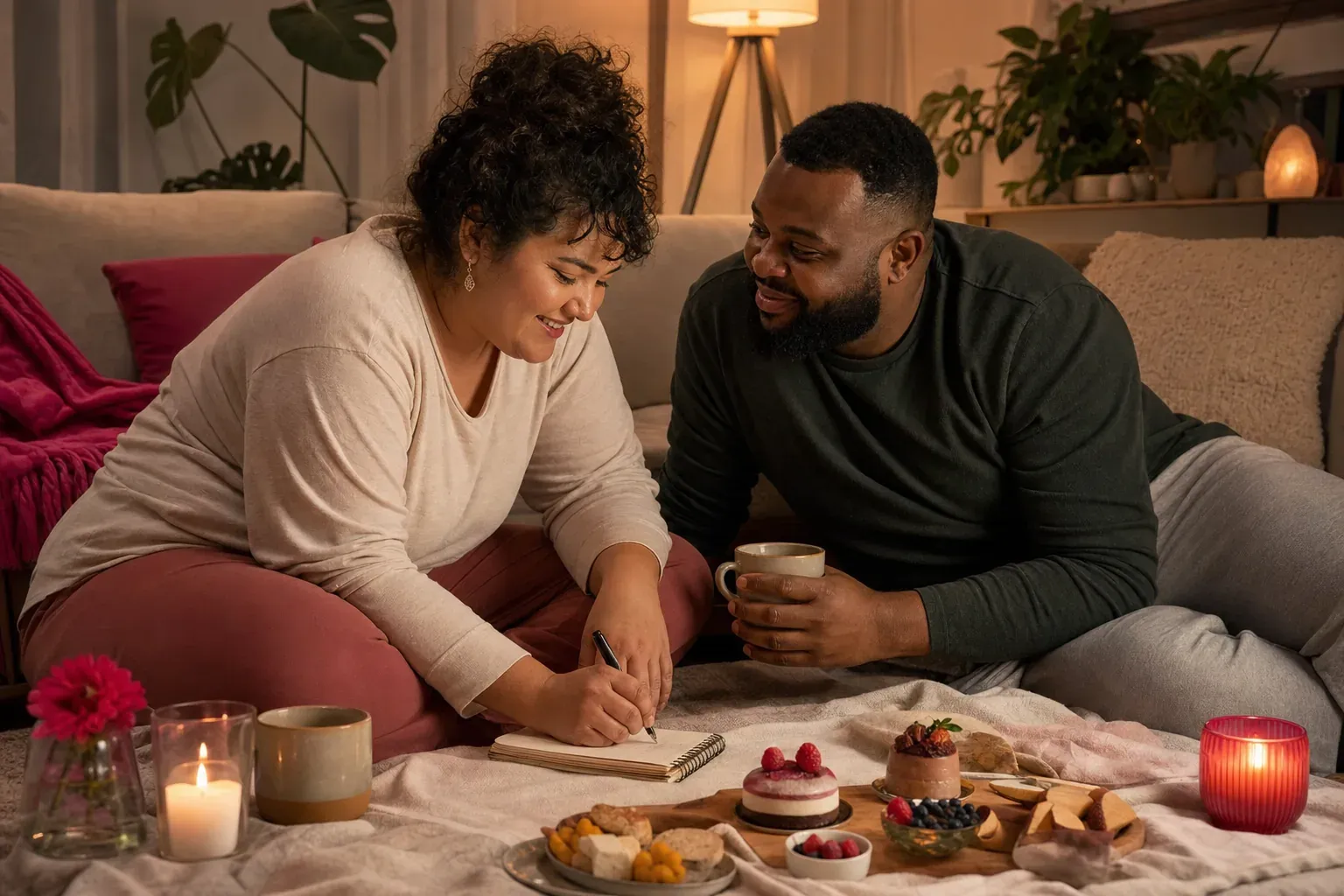
Parents and caregivers may need a smaller version. Plan around the window you have, perhaps after bedtime or during a quiet break. One at-home date source recommends focusing on thoughtful details instead of trying to build a perfect scene. That is good advice. A clean corner, music, and a shared treat may be plenty.
Make cleanup part of the plan. Choose food that won't leave one person washing dishes for an hour. Use one tray. Put the game back in its box before you sit down. The date should give back some energy.
You still need to decide what the plan will take from you.
BlushQuest can sit inside an at-home date without replacing it. Choose a two- or four-day card pace, then let one card appear at a time. One subscription covers both partners, and only the person sending the invitation needs an active subscription. The yearly plan includes a 14-day trial. Check the current offer before joining, since plan details can change.
Step 6: Turn One Good Idea Into a Shared Rhythm
One good date can become a shared rhythm if you make the next plan before the glow fades. Keep it light and repeatable.
At the end of the evening, ask two questions:
- What part should we repeat?
- What should we change next time?
Don't ask for a full review. You aren't grading the date. You are learning what helps both of you feel present.
Set a loose cadence. That might mean one mini date each week or one longer date twice a month. Pick a day that already has a natural pause. A plan attached to an existing routine is easier to remember.
Keep a short list of ideas sorted by effort. Write down three low-energy options, three medium options, and three high-energy options. Add notes about setup time. That list will save you from making every date decision at 9:30 p.m.
For long-distance couples, the same rhythm can happen online. Choose a shared film, cook the same recipe during a video call, or keep an online game going over several days. Long-distance date ideas work best when you set the next call before the current one ends. That removes the gap where good intentions disappear.
You can also create a shared “someday” list. Add places to eat, skills to learn, films to watch, and small things to try at home. Review it when you have more energy. On a tiring night, choose from the low-effort side of the list.
A structured couples game can help when the list keeps growing but nothing happens. In BlushQuest, one partner creates a quest with 7 or 15 wish cards. The cards come from the partner, not a generic question feed. Each card has a clear window, and the one-card-at-a-time format gives you a reason to return.
The system also keeps the mood playful. On-time cards build a streak and contribute to the couple level. Badges mark progress. Ratings and timing help determine the Quest Champion at the end. The goal is visible effort without turning affection into a scorecard.
Use the structure only when it helps. If your partner wants a quiet night, choose a quiet night. If a card doesn't feel right, talk about it or skip the quest. The invitation can be a surprise. Participation cannot.
For couples who manage the usable parts of life well but miss feeling like a couple, this action-first format can offer a gentle place to begin. You don't have to open with a heavy talk. Start with a wish card. Let the conversation come naturally.
After your first few dates, notice the pattern. Maybe short walks work better than long dinners. Maybe playful competition brings out more laughter. Maybe the best nights happen at home because the travel time drains you. Keep what works and drop what doesn't.
Your shared rhythm doesn't need to look impressive. It needs to be possible, mutual, and worth repeating.
FAQ: Fun Date Night Ideas for Couples
What are fun date night ideas for couples at home?
Fun at-home dates include a tasting night, a living room picnic, a two-person game, karaoke, a shared playlist, or a themed meal. Pick one main activity and add one small mood change. Candles, music, or a handwritten note can make a familiar room feel set apart without adding much work.
What can couples do for a date night with no money?
Couples can take a walk, make a playlist, plan a dream trip, build a blanket picnic, trade massages within shared comfort, or use games they already own. A free date works best when you choose a start time and put away distractions. The plan matters more than spending.
How do you plan a date night when you're both tired?
Choose a short activity that needs little setup, such as dessert, a favorite film, a puzzle, or a 20-minute walk. Decide the length before you begin. If one person has less energy, let that person choose the pace. A small date is still a date.
How can couples make a date night feel special?
Change one part of the normal routine. Eat in a different room, dress up slightly, pick a theme, or let each person choose one part of the night. Keep the change small enough to enjoy. Special doesn't mean elaborate. It means both people know the time was set aside for them.
What is a couples quest game?
A couples quest game gives partners a series of shared wish cards to complete over a set window. In BlushQuest, one partner writes cards for the other, the invited partner chooses whether to accept, and cards appear one at a time. The couple can use curated ideas or write custom cards.
Conclusion
Choose a date that fits your energy, then add one detail that makes it feel intentional. If you want help turning wishes into small shared moments, start a private BlushQuest with your partner. Keep the invitation light, respect the answer, and let your next good moment be the beginning of a rhythm.